Skin cancer treatment without surgery.
A non-surgical treatment option for select basal cell and squamous cell skin cancers.
Excellent published outcomes for appropriate candidates
No incisions or stitches
Typically no anesthesia
Minimal downtime for many patients
10+ years at our Pennsylvania offices
3 eBx platforms: Sensus, Elekta, Xstrahl
What Is Electronic Brachytherapy?
Electronic brachytherapy, also called eBx, is a non-surgical treatment option for select non-melanoma skin cancers, including certain basal cell carcinomas and squamous cell carcinomas.
The treatment delivers a focused, low-energy dose of radiation directly to the skin cancer site. Because there are no incisions or stitches, it may be a good option for patients who want to avoid surgery or who may not be ideal surgical candidates.
Each treatment session usually takes only a few minutes. Many patients are able to return to normal daily activities shortly after treatment. Mild redness, irritation, tenderness, crusting, or skin color change at the treatment site can occur.
Alpha Dermatology has offered electronic brachytherapy at our Pennsylvania offices for more than 10 years. Our published, peer-reviewed research has shown excellent long-term outcomes in appropriately selected cases. Treatment is overseen by board-certified dermatologist Daniel I. Shrager, M.D., who personally plans and supervises each course of care.
Who Is It Right For?
Electronic brachytherapy may be appropriate for:
Cancers on cosmetically sensitive areas such as the face, nose, ears, or scalp
Older patients or patients at higher surgical risk
Patients taking blood thinners
Patients who want to avoid surgery when a non-surgical option is medically appropriate
Patients with select basal cell or squamous cell skin cancers
Electronic brachytherapy is not right for every skin cancer. The best treatment depends on the type of cancer, size, location, depth, pathology, medical history, and patient preference.
How It Works
Consultation and evaluation — we review your diagnosis, examine the site, and determine whether electronic brachytherapy is an appropriate option.
Treatment planning — the treatment area is carefully mapped so radiation can be delivered directly to the cancer site.
Treatment sessions — each session usually takes only a few minutes and is generally well tolerated.
Between sessions — most patients can continue normal daily activities. Mild redness or irritation at the treatment site can occur.
Follow-up — we monitor the treated area and continue regular skin cancer surveillance.
eBx vs. Surgery
Incisions and stitches — eBx: none · Surgery: yes
Anesthesia — eBx: typically not required · Surgery: local anesthesia is commonly used
Recovery time — eBx: minimal downtime for many patients · Surgery: varies by procedure and location
Scarring risk — eBx: no surgical incision, though skin changes can occur · Surgery: scarring risk varies by location and repair
Cure rate — eBx: excellent published outcomes in appropriate candidates · Surgery/Mohs: excellent outcomes depending on cancer type, size, location, and risk factors
Blood thinners — eBx: may be an option for some patients on blood thinners · Surgery: bleeding risk may need to be considered
Session length — eBx: usually minutes · Surgery: varies
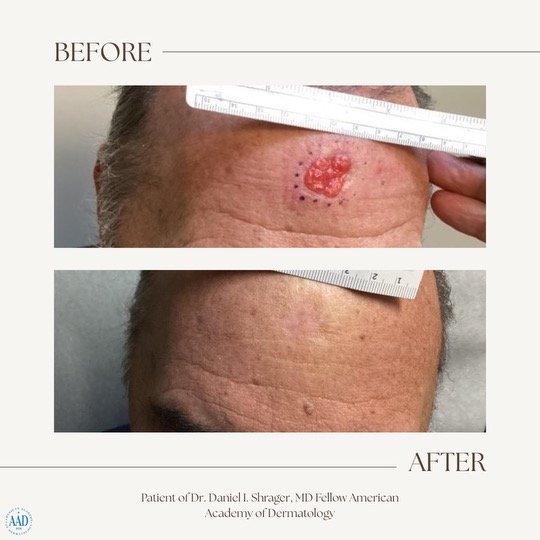
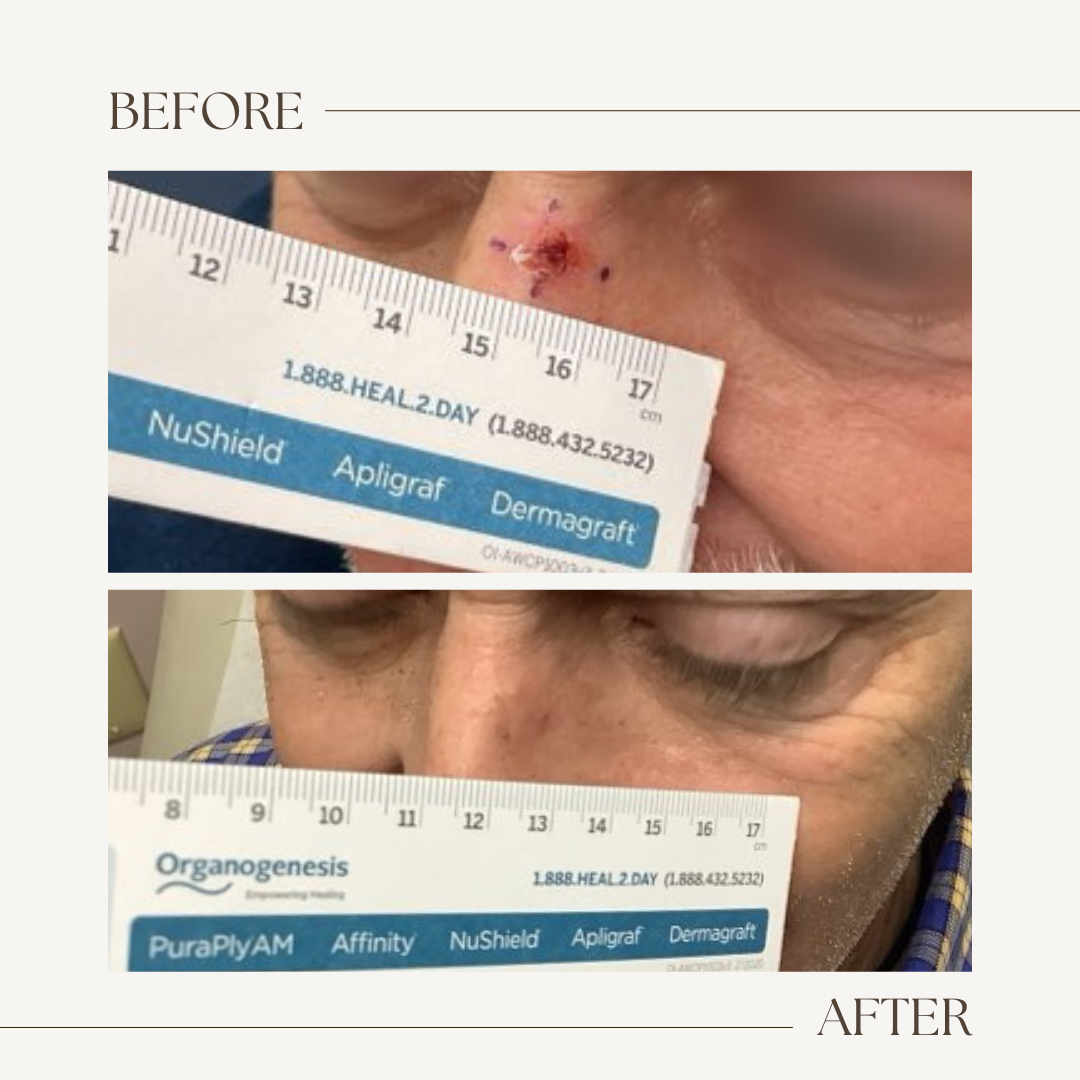
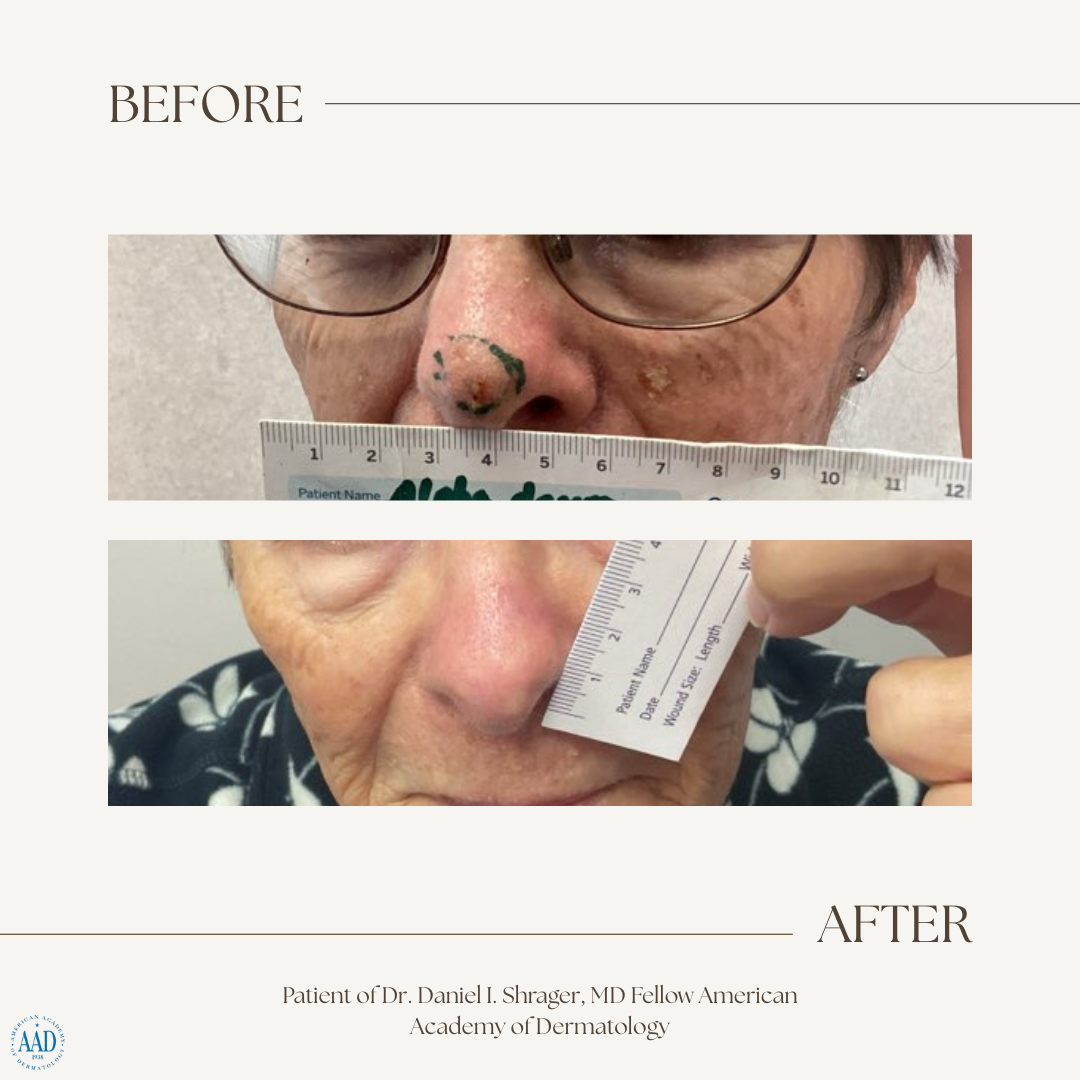
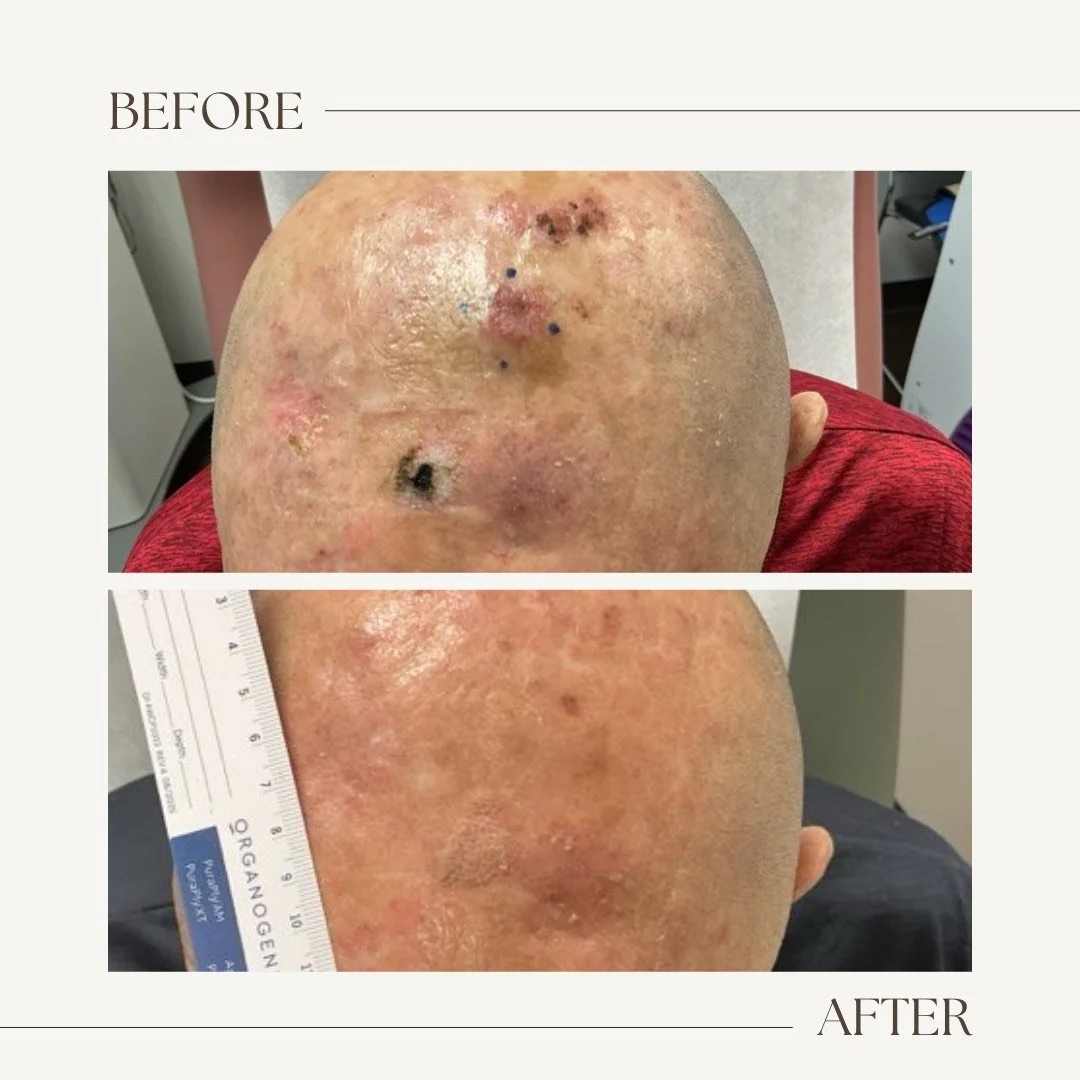
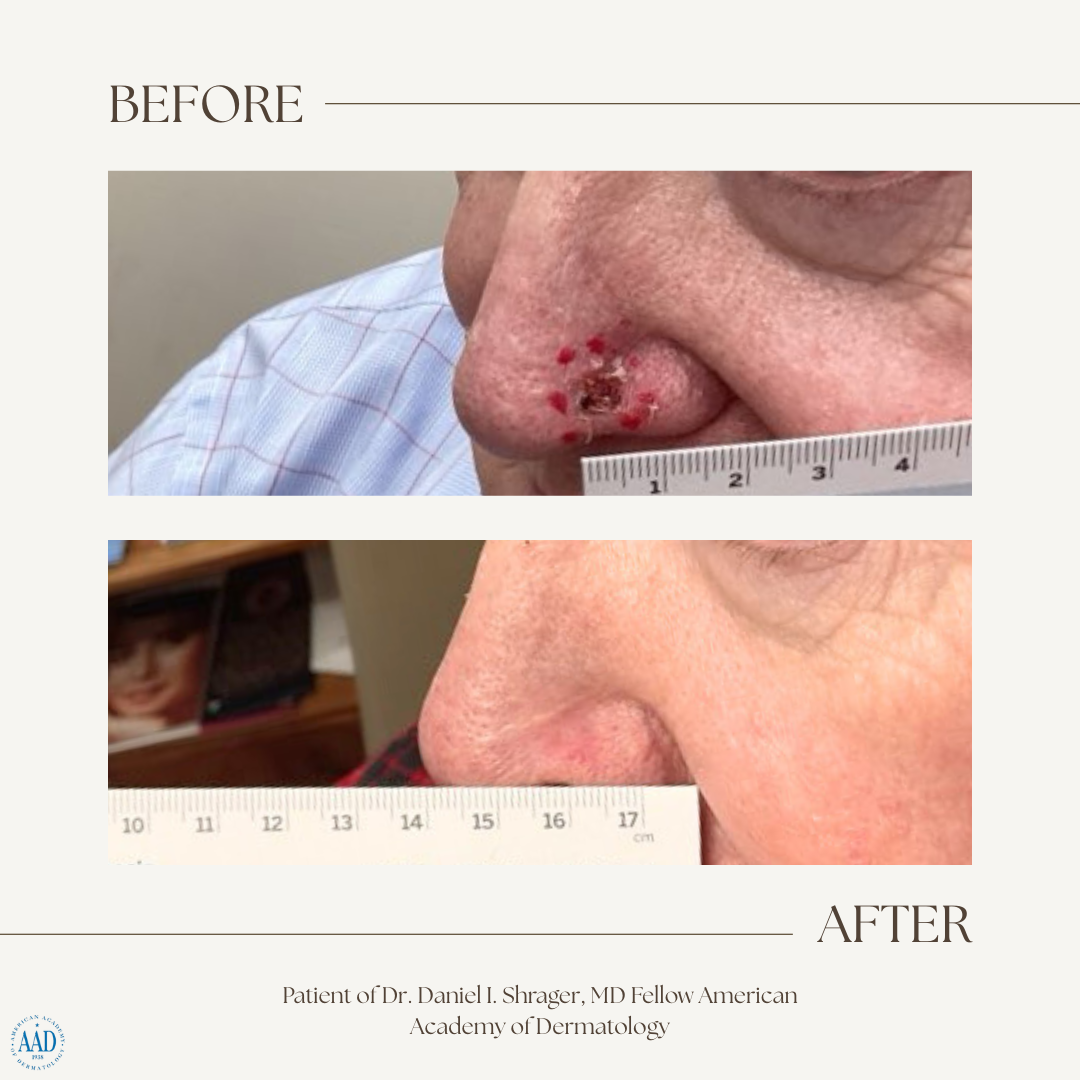
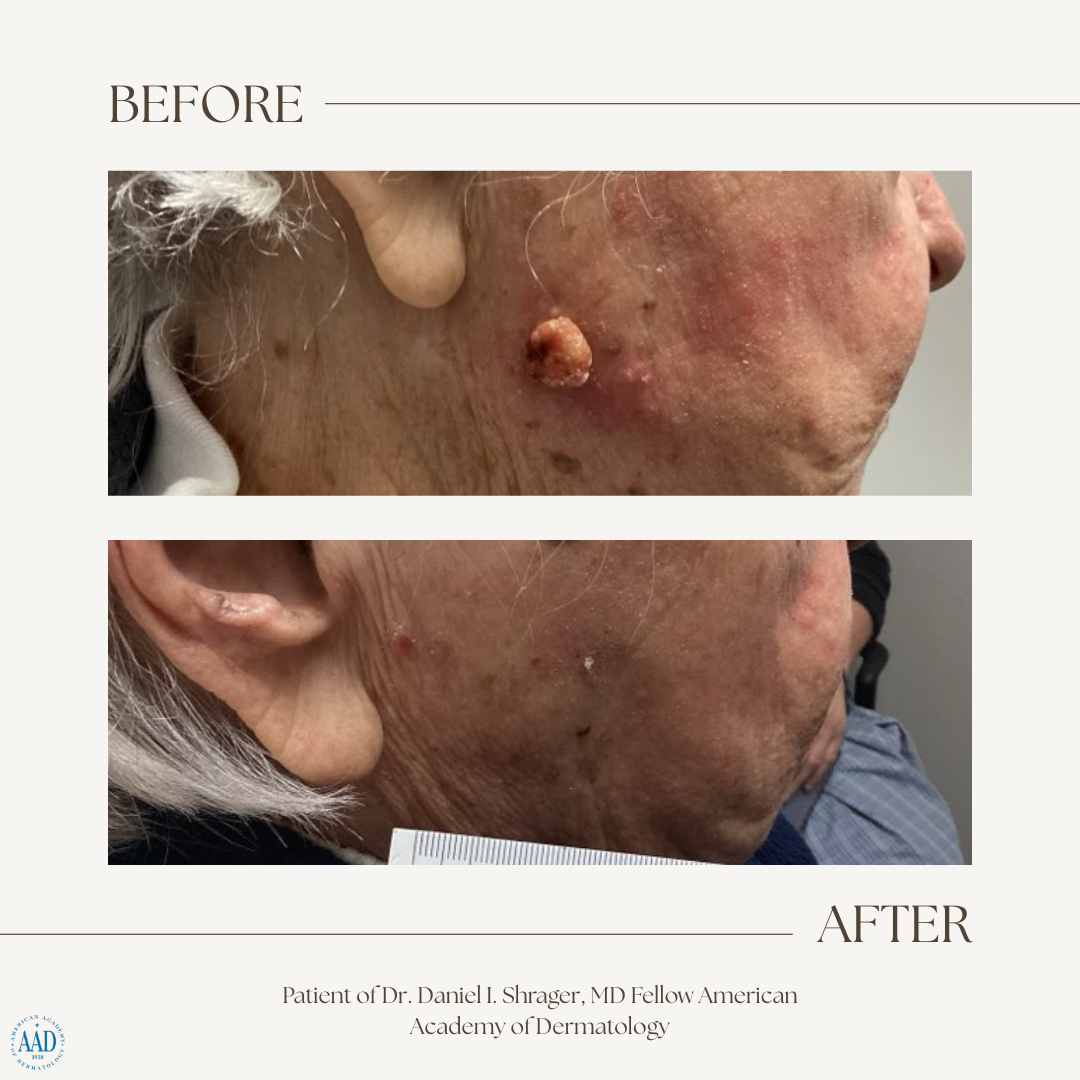
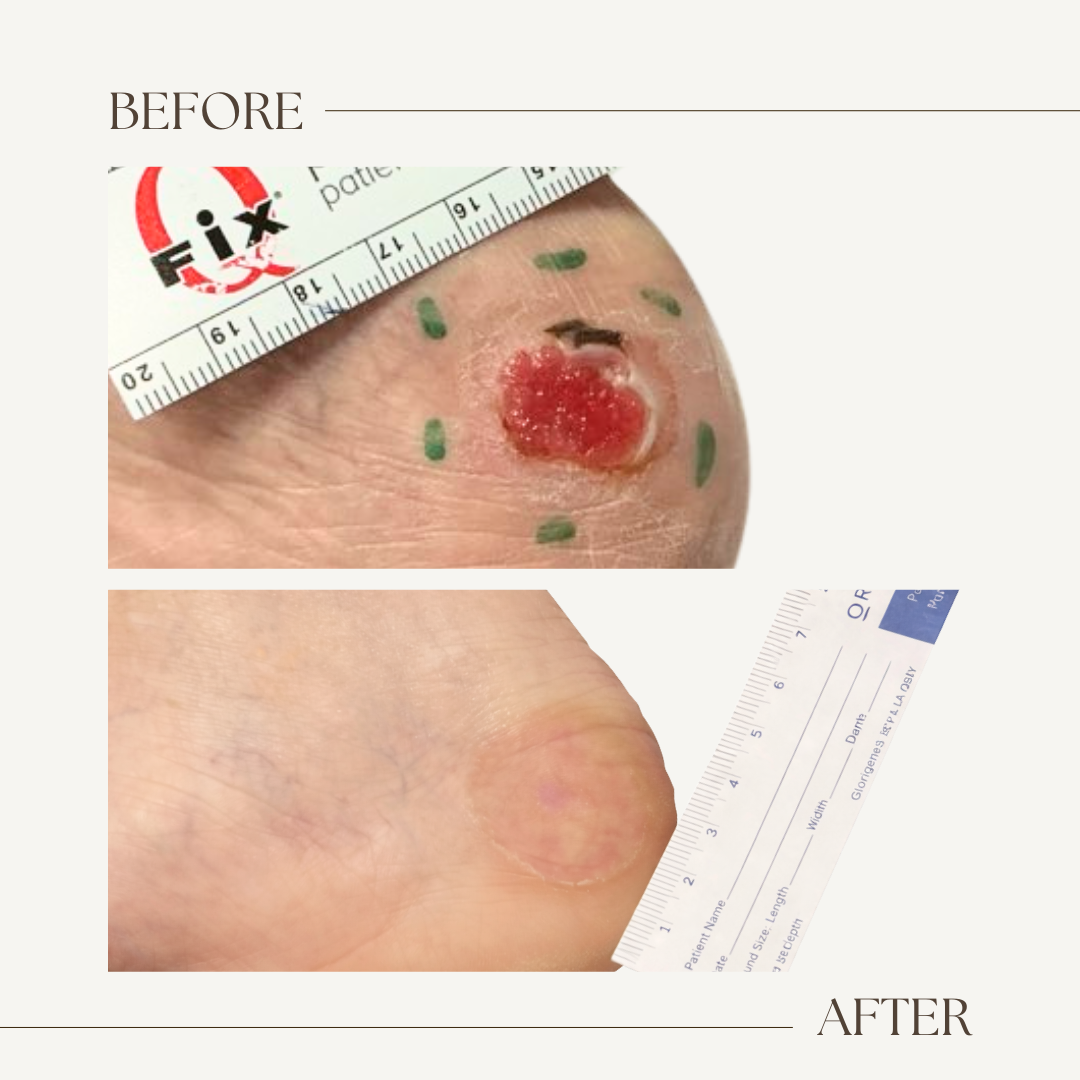
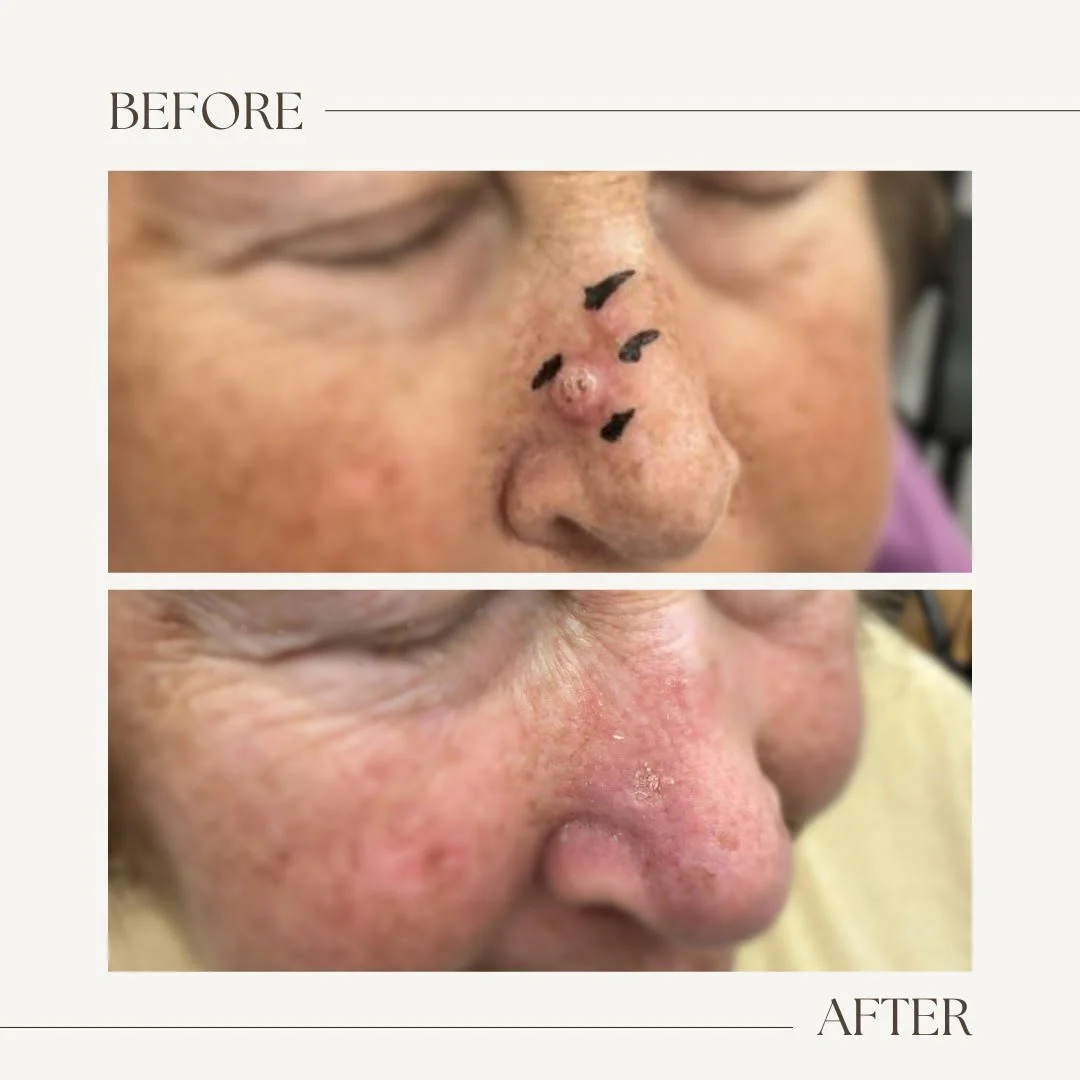
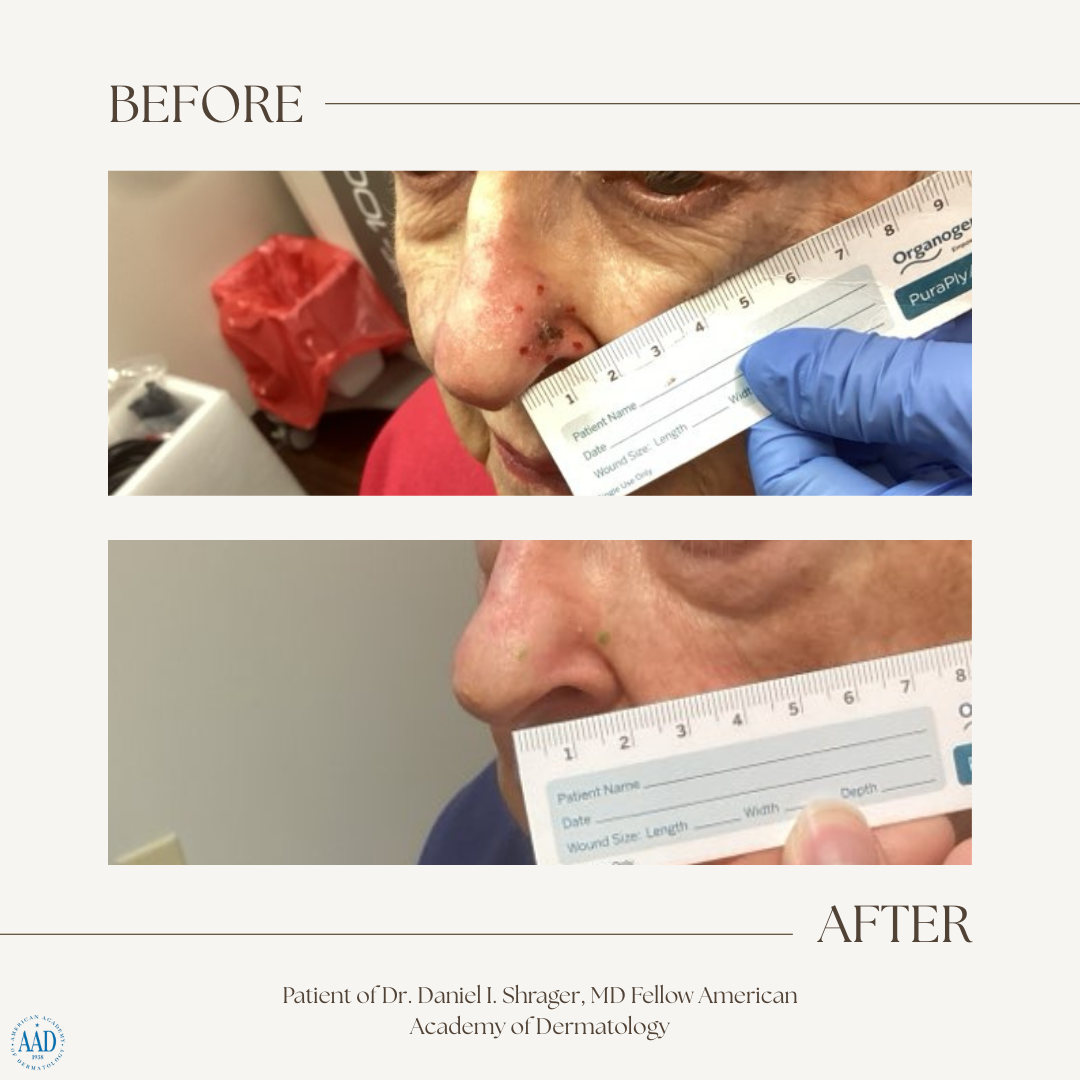
Before & After Photos
All photos show real Alpha Dermatology patients. Credit: Daniel I. Shrager, M.D.
Click below to read Alpha Dermatology’s peer-reviewed research on the long-term success and cure rate of electronic brachytherapy.
To find out whether electronic brachytherapy is right for you, schedule a consultation with Alpha Dermatology. Our team will review your diagnosis, discuss your options, and recommend the approach best suited to your skin cancer and your goals. Contact us at our Sellersville or New Hope, Pennsylvania offices to request an appointment.